R' Shimon Zak's article "Abba, of blessed memory" is cited in F-36, F-06, F-31, F-34 and Q-19.
Legible original page
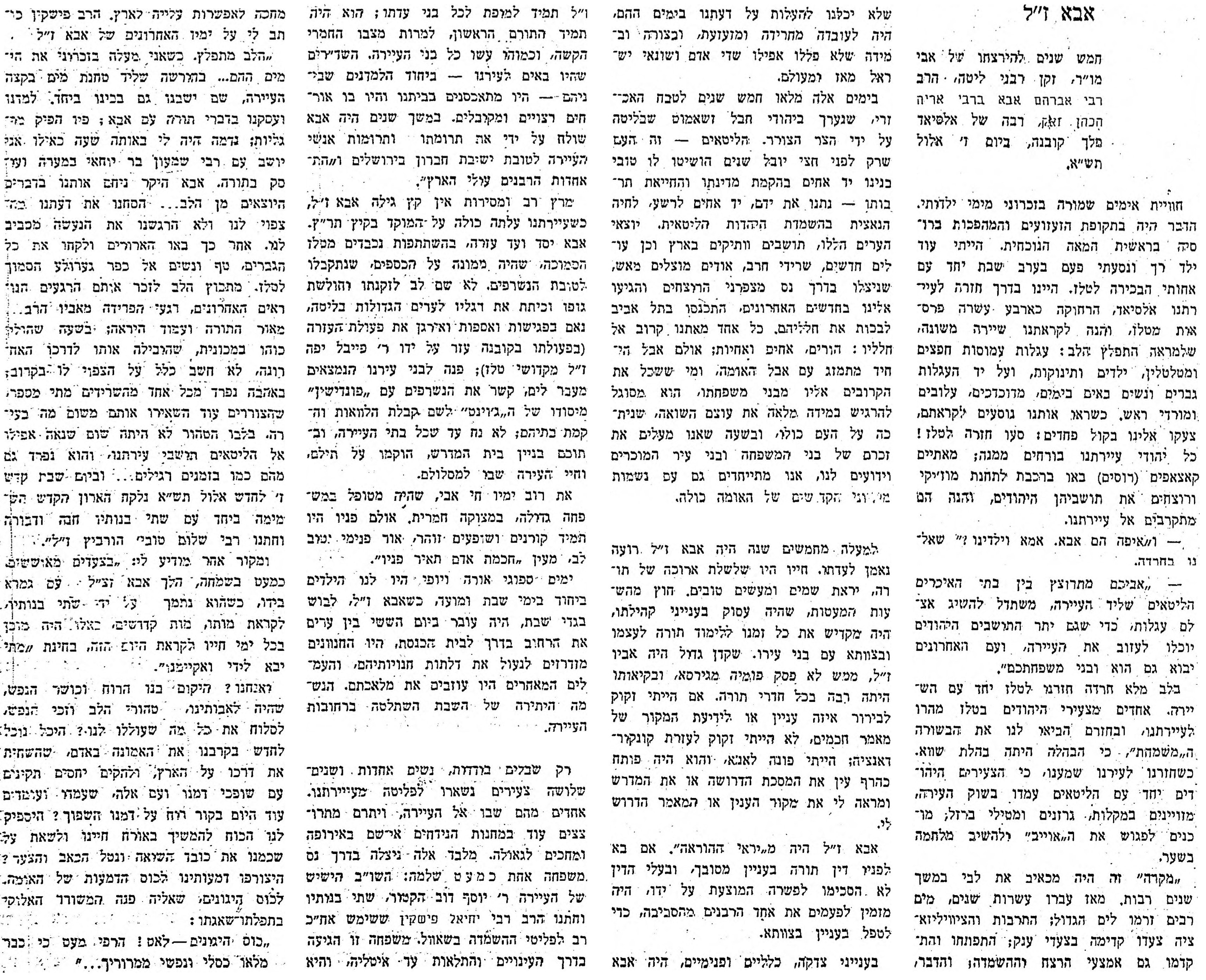
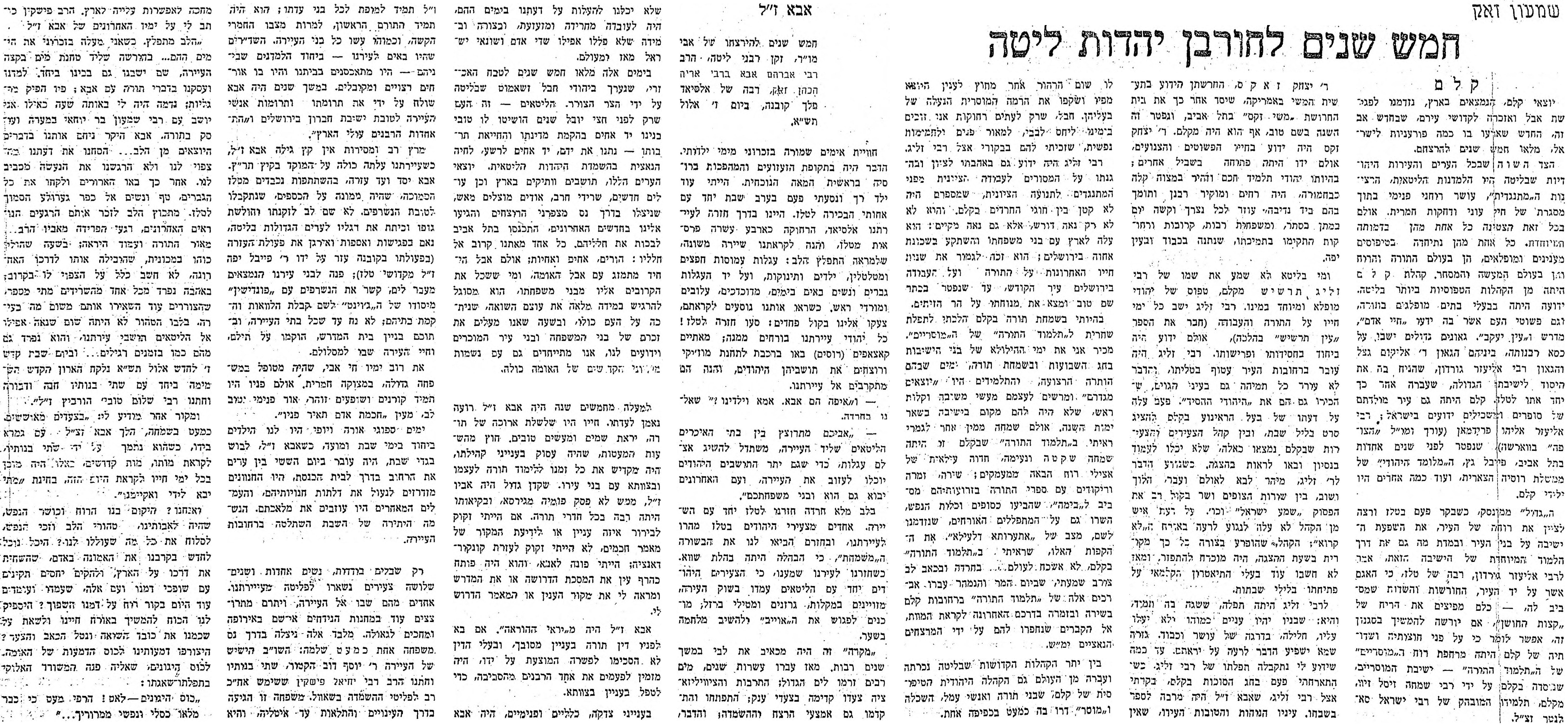
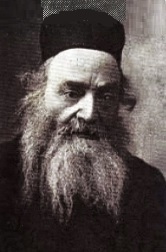
Added alongside the thumbnail above, which is kept unchanged. The thumbnail is not legible; the images below are from the National Library of Israel Historical Jewish Press page, hzh19460823-01.2.38.
Avraham Abba Zak
English translation of the article
Translated from the printed Hebrew of "אבא ז"ל" in HaTzofe, 23 August 1946, read from the National Library of Israel page image above and checked against the Toratcha retype below. Titles and names follow the print. Bracketed notes mark readings or terms explained by the translator. Status: new, not yet reviewed by Boruch.
Abba, of Blessed Memory
Five years since the murder of my father and teacher, the elder of the rabbis of Lithuania, the rabbi, Rabbi Avraham Abba son of Rabbi Aryeh HaKohen Zak, rabbi of Alsiad, Kovno province, on the 7th of Elul 5701.
A terrifying experience is kept in my memory from my childhood days. It was in the time of the upheavals and revolutions in Russia, at the beginning of the present century. I was still a young child, and once, on a Sabbath eve, I was traveling with my elder sister to Telz. We were on the road back to our town, Alsiad, about fourteen versts from Telz, and there came toward us a strange convoy, the sight of which made the heart shudder: wagons loaded with belongings and household goods, children and infants, and beside the wagons men and women, elderly, dejected, wretched, with heads bowed. When they saw us traveling toward them, they cried out to us in voices of fear: "Go back to Telz! All the Jews of our town are fleeing it. Two hundred Katsapes (Russians) came by train to the Mozhiki station and are murdering its Jewish inhabitants, and now they are approaching our town." "And where are Father, Mother and our children?" we asked in alarm.
"Your father is running about among the houses of the Lithuanian peasants near the town, trying to get wagons from them, so that the rest of the Jewish residents can also leave the town, and he and your family will come with the last of them."
With hearts full of alarm we returned to Telz together with the convoy. Some of the young Jews of Telz hurried to our town, and on their return they brought us the glad tidings that the panic had been a false one. When we returned to our town we heard that the young Jews, together with the Lithuanians, had stood in the town market, armed with sticks, axes and iron bars, ready to meet the "enemy" and fight back at the gate. This "incident" pained my heart for many years. Decades have passed since then, many waters have flowed into the great sea, culture and civilization have marched forward in giant steps, and the means of murder and destruction have also developed and advanced; and what we could not have imagined in those days became a horrifying and shattering fact, in a form and to a degree that not even the demons in human form and the haters of Israel of all time had imagined.
In these days five years have been completed since the cruel slaughter carried out against the Jews of the Zhamut [Samogitia] region of Lithuania by the hateful oppressor. The Lithuanians, that very people to whom, only half a jubilee [25 years] ago, the best of our sons extended a brotherly hand in the founding of their state and the revival of their culture, gave their hand, a brotherly hand, to the wicked, to the Nazi beast, in the destruction of Lithuanian Jewry. Natives of these towns, long-time residents of the country and also new immigrants, survivors of the sword, brands plucked from the fire, who were saved by a miracle from the claws of the murderers and reached us in recent months, gathered in Tel Aviv to weep for their dead. Each of us is close to his own dead: parents, brothers and sisters; but the mourning of the individual merges with the mourning of the nation, and whoever has lost those close to him from his family is able to feel in full measure the magnitude of the catastrophe that struck the whole people, and when we recall the members of the family and the townspeople known and familiar to us, we also join together with the souls of the multitudes of the holy ones of the entire nation.
For more than fifty years Abba, of blessed memory, was a faithful shepherd to his flock. His life was a long chain of Torah, fear of Heaven and good deeds. Apart from the few hours when he was busy with the affairs of his community, he devoted all his time to the study of Torah, alone and together with the people of his town. A great diligent scholar was his father, of blessed memory; he virtually never ceased from study, and his command of every chamber of the Torah was great. If I needed to clarify some matter or to know the source of a saying of the Sages, I had no need of a concordance; I would turn to Abba, and he would open, in the blink of an eye, the tractate required or the Midrash and show me the source of the matter or the saying I needed. Abba, of blessed memory, was among those who "fear to rule" [in halakhic matters]. If a Torah case in a complicated matter came before him and the litigants did not agree to the compromise he proposed, he would sometimes invite one of the rabbis of the surrounding area to deal with the matter jointly.
In matters of charity, general and local, Abba, of blessed memory, was always an example to all the members of his congregation; he was always the first to give, despite his hard material situation, and all the people of the town did likewise. The emissaries who came to our town, especially the learned among them, would lodge in our house and were welcome and accepted guests there. For years Abba sent through me his contribution and the contributions of the people of the town to the Hebron Yeshiva in Jerusalem and to the Union of Rabbis who Emigrated to the Land. Great energy and boundless devotion did Abba, of blessed memory, show when our whole town went up in flames in the summer of 5690 [1930]. Abba founded a relief committee, with the participation of dignitaries from nearby Telz, which was put in charge of the money received for the benefit of those burned out. Paying no heed to his old age and bodily weakness, he wore out his feet traveling to the large towns in Lithuania, spoke at meetings and gatherings, and organized the relief effort (in his work in Kovno he was assisted by R' Peivel Yaffe, of blessed memory, one of the holy martyrs of Telz). He appealed to our townspeople who were overseas, and connected those who had been burned out with a "Fundishin" [loan fund] founded by the "Joint" for the purpose of obtaining loans and rebuilding their homes; he did not rest until all the houses of the town, among them the study-hall building, were rebuilt on their foundations and the life of the town returned to its course.
Most of the days of my father's life, burdened as he was with a large family, were spent in material hardship. But his face was always radiant and glowing, an inner light flowing from the heart, like "a man's wisdom makes his face shine." Days soaked in light and beauty were ours as children, especially on Sabbaths and festivals, when Abba, of blessed memory, dressed in Sabbath clothes, would pass on Friday at twilight through the street on the way to the synagogue; the shopkeepers would hurry to lock the doors of their shops, and the late workers would leave their work. The extra soul of the Sabbath took hold of the streets of the town.
Only a few gleanings [literally "ears of grain"], some women and two or three young men, were left as survivors from our town. Some of them returned to the town, and the rest are still wandering in the displaced persons camps somewhere in Europe, waiting for redemption. Besides these, almost one whole family was saved by a miracle: the elderly ritual slaughterer of the town, R' Yosef Dov Hakator [the scan is hard to read; Toratcha prints "Hakator"], his two daughters and his son-in-law, the rabbi, Rabbi Yechiel Fishkin, who afterward served as rabbi to the survivors of the destruction in Shavli [Šiauliai]. This family made its way through torments and hardships as far as Italy, and is waiting for a possibility of immigration to the Land. Rabbi Fishkin writes to me about the last days of Abba, of blessed memory:
"The heart shudders when I recall those days... In the grove by the water mill at the edge of the town, there we sat and wept together, studied and engaged in words of Torah with Abba; his mouth brought forth pearls; it seemed to me at that hour as though I were sitting with Rabbi Shimon bar Yochai in the cave and engaged in Torah. Dear Abba comforted us with words that came from the heart... We turned our minds away from what awaited us and did not feel what was happening around us. Afterward the accursed ones came and took all the men, children and women to the village of Gerulai near Telz. The heart contracts at the memory of those last terrible moments, the moments of parting from his father the rabbi, the light of Torah and pillar of fear of Heaven; when they took him away in a vehicle that carried him on his last road, he did not think at all about what awaited him soon; with love he took leave of each of the few survivors whom the persecutors, for some reason, still left in the town. In his pure heart there was no hatred at all, not even toward the Lithuanians, the residents of our town, and he took leave of them too as in ordinary times... And on the holy Sabbath, the 7th of the month of Elul 5701, the holy ark was taken to heaven, together with his two daughters, Chana and Devora, and his son-in-law, Rabbi Shalom Tuvia Horowitz, of blessed memory."
And another source informs me: "With firm steps, almost with joy, Abba, of blessed memory, went with a Gemara in his hand, supported by his two daughters, toward his death, the death of holy ones such as these; as if he had been prepared all the days of his life for that day, in the sense of 'when will it come to my hand, that I may fulfill it.'"
And we? Will the spirit and the strength of soul that our fathers had, pure of heart and pure of soul, arise in us, to forgive all that was done to us? Can we renew within us faith in man, who has corrupted his way on earth, and establish proper relations with the shedders of our blood and with those who stood and still stand today in cold composure over our spilled blood? Will we have the strength to continue in our way of life and to bear on our shoulders the weight of the Shoah and the burden of pain and sorrow? Let our tears join the cup of tears of the nation, the cup of sorrows, to which the divine poet turned in his prayer and his cry:
"Cup of sorrows, gently, ease off a little, for my loins and my soul are already full of your bitterness..."
R' Shimon Zak
Hebrew text: the Toratcha reprint of the article
This is the text as retyped on toratcha.com. It is a reprint, not the newspaper original, and a few words differ from the printed page (for example "ושאיפה" where HaTzofe prints "ואיפה", and "בנותיה" for "בנותיו"). The original page above is the authority. Source: toratcha.com/?p=20866.
חמש שנים להירצחו של אבי מו"ר, זקן רבני ליטה, הרב רבי אברהם אבא ברבי אריה הכהן זאק, רבה של אלסיאד פלך קובנה, ביום ז' אלול תש"א.
חוויית אימים שמורה בזכרוני מימי ילדותי. הדבר היה בתקופת הזעזועים והמהפכות ברוסיה בראשית המאה הנוכחית. הייתי עוד ילד רך ונסעתי פעם בערב שבת יחד עם אחותי הבכירה לטלז. היינו בדרך חזרה לעיירתנו אלסיאד, הרחוקה כארבע עשרה פרסאות מטלז, והנה לקראתנו שיירה משונה שלמראה התפלץ הלב: עגלות עמוסות חפצים ומטלטלין, ילדים ותינוקות, ועל יד העגלות גברים ונשים באים בימים, מדוכדכים, עלובים ומורדי ראש, כשראו אותנו נוסעים לקראתם, צעקו אלינו בקול פחדים: סעו חזרה לטלז! כל יהודי עיירתנו בורחים ממנה; מאתיים קאצאפים (רוסים) באו ברכבת לתחנת מוז'יקי ורוצחים את תושביהן היהודים, והנה הם מתקרבים אל עיירתנו.
"ושאיפה הם אבא, אמא וילדינו?" שאלנו בחרדה.
"אביכם מתרוצץ בין בתי האיכרים הליטאים שליד העיירה, משתדל להשיג אצלם עגלות, כדי שגם יתר התושבים היהודים יוכלו לעזוב את העיירה, ועם האחרונים יבוא גם הוא ובני משפחתכם".
בלב מלא חרדה חזרנו לטלז יחד עם השיירה. אחדים מצעירי היהודים בטלז מהרו לעיירתנו, ובחזרם הביאו לנו את הבשורה ה'משמחת', כי הבהלה היתה בהלת שווא. כשחזרנו לעירנו שמענו, כי הצעירים היהודים יחד עם הליטאים עמדו בשוק העיירה, מזויינים במקלות, גרזנים ומטילי ברזל; מוכנים לפגוש את ה'אוייב' ולהשיב מלחמה בשער.
"מקרה" זה היה מכאיב את לבי במשך שנים רבות, מאז עברו עשרות שנים, מים רבים זרמו לים הגדול; התרבות והציוויליזאציה צעדו קדימה בצעדי ענק; התפתחו והתקדמו גם אמצעי הרצח וההשמדה, והדבר שלא יכלנו להעלות על דעתנו בימים ההם, היה לעובדה מחרידה ומזעזעת, ובצורה ובמידה שלא פללו אפילו שדי אדם ושונאי ישראל מאז ומעולם.
בימים אלה מלאו חמש שנים לטבח האכזרי, שנערך ביהודי חבל זשאמוט שבליטה על ידי הצר הצורר. הליטאים זה העם שרק לפני חצי יובל שנים הושיטו לו טובי בנינו יד אחים בהקמת מדינתו והחייאת תרבותו – נתנו את ידם, יד אחים לרשע, לחיה הנאצית בהשמדת היהדות הליטאית. יוצאי הערים הללו, תושבים וותיקים בארץ וכן עולים חדשים, שרידי חרב, אודים מוצלים מאש, שניצלו בדרך נס מצפרני הרוצחים והגיעו אלינו בחדשים האחרונים, התכנסו בתל אביב לבכות את חלליהם, כל אחד מאתנו קרוב אל חלליו: הורים, אחים ואחיות; אולם אבל היחיד מתמזג עם אבל האומה, ומי ששכל את הקרובים אליו מבני משפחתו, הוא מסוגל להרגיש במידה מלאה את עוצם השואה, שניתכה על העם כולו, ובשעה שאנו מעלים את זכרם של בני המשפחה ובני עיר המוכרים וידועים לנו, אנו מתייחדים גם עם נשמות מוני הקדשים של האומה כולה.
למעלה מחמשים שנה היה אבא ז"ל רועה נאמן לעדתו. חייו היו שלשלת ארוכה של תורה, יראת שמים ומעשים טובים, חוץ מהשעות המעטות, שהיה עסוק בענייני קהילתו, היה מקדיש את כל זמנו ללימוד תורה לעצמו ובצוותא עם בני עירו. שקדן גדול היה אביו ז"ל, ממש לֹא פסק פומיה מַגִירְסַא, וְבַקיאותו היתה רבה בכל חדרי תורה. אם הייתי זקוק לבירור איזה עניין או לידיעת המקור של מאמר חכמים, לא הייתי זקוק לעזרת קונקורדאנציה; הייתי פונה לאבא, והוא היה פותח כהרף עין את המסכת הדרושה או את המדרש ומראה לי את מקור הענין או המאמר הדרוש לי.
אבא ז"ל היה מ"יראי ההוראה", אם בא לפניו דין תורה בעניין מסובך, ובעלי הדין לא הסכימו לפשרה המוצעת על ידו, היה מזמין לפעמים את אחד הרבנים מהסביבה, כדי לטפל בעניין בצוותא.
בענייני צדקה, כלליים ופנימיים, היה אבא ז"ל תמיד למופת לכל בני עדתו; הוא היה תמיד התורם הראשון, למרות מצבו החומרי הקשה, וכמוהו עשו כל בני העיירה. השד"רים שהיו באים לעירנו ביחוד הלמדנים שביניהם – היו מתאכסנים בביתנו והיו בו אורחים רצויים ומקובלים. במשך שנים היה שולח על ידי את תרומתו ותרומות אנשי העיירה לטובת ישיבת חברון בירושלים ו"התאחדות הרבנים עולי הארץ". מרץ רב ומסירות אין קץ גילה אבא ז"ל, כשעיירתנו עלתה כולה על המוקד בקיץ תר"ץ. אבא יסד ועד עזרה, בהשתתפות נכבדים מטלז הסמוכה, שהיה ממונה על הכספים, שנתקבלו לטובת הנשרפים. לא שם לב לזקנתו וחולשת גופו וכיתת את רגליו לערים הגדולות בליטה, נאם בפגישות ואספות ואירגן את פעולת העזרה (בפעולתו בקובנה עזר על ידו ר' פייבל יפה ז"ל מקדושי טלז); פנה לבני עירנו הנמצאים מעבר לים, קשר את הנשרפים עם "פונדישין" מיסודו של ה"ג'וינט" לשם קבלת הלוואות והקמת בתיהם; לא נח עד שכל בתי העיירה, ובתוכם בניין בית המדרש, הוקמו על תילם, וחיי העיירה שבו למסלולם.
את רוב ימיו חי אבי, שהיה מטופל במשפחה גדולה, במצוקה חומרית, אולם פניו היו תמיד קורנים ושופעים זוהר, אור פנימי וטוב לב, מעין "חכמת אדם תאיר פניו". ימים ספוגי אורה ויופי היו לנו הילדים ביחוד בימי שבת ומועד, כשאבא ז"ל, לבוש בגדי שבת, היה עובר ביום הששי בין ערים את הרחוב בדרך לבית הכנסת, היו החנוונים מזדרזים לנעול את דלתות חנויותיהם, והעמלים המאחרים היו עוזבים את מלאכתם. הנשמה היתירה של השבת השתלטה ברחובות העיירה.
רק שבלים בודדות, נשים אחדות ושנים־שלושה צעירים נשארו לפליטה מעיירתנו. אחדים מהם שבו אל העיירה, ויתרם מתרוצצים עוד במחנות הנידחים אי־שם באירופה ומחכים לגאולה. מלבד אלה – ניצלה בדרך גם משפחה אחת כמעט שלמה: השו"ב הישיש של העיירה ר' יוסף דוב הקטור, שתי בנותיו וחתנו הרב רבי יחיאל פישקין ששימש אחר כך רב לפליטי ההשמדה בשאוול. משפחה זו הגיעה בדרך העינויים והתלאות עד איטליה, והיא מחכה לאפשרות עלייה לארץ. הרב פישקין כותב לי על ימיו האחרונים של אבא ז"ל:
"הלב מתפלץ. כשאני מעלה בזיכרוני את הימים ההם… בחורשה שליד טחנת מים בקצה העיירה, שם ישבנו גם בכינו ביחד, למדנו ועסקנו בדברי תורה עם אבא: פיו הפיק מרגליות; נדמה היה לי באותה שעה כאילו אני יושב עם רבי שמעון בר יוחאי במערה ועוסק בתורה. אבא היקר ניחם אותנו בדברים היוצאים מן הלב… הסחנו את דעתנו מהצפוי לנו ולא הרגשנו את הנעשה מסביב לנו. אחר כך באו הארורים ולקחו את כל הגברים, טף ונשים אל כפר גערולע הסמוך לטלז. מתכווץ הלב לזכר אותם הרגעים הנוראים האחרונים, רגעי הפרידה מאביו הרב… מאור התורה ועמוד היראה; בשעה שהוליכוהו במכונית, שהובילה אותו לדרכו האחרונה, לא חשב כלל על הצפוי לו בקרוב: באהבה נפרד מכל אחד מהשרידים מתי מספר שהצוררים עוד השאירו אותם משום מה בעיירה. בלבו הטהור לא היתה שום שנאה אפילו אל הליטאים תושבי עיירתנו, והוא נפרד גם מהם כמו בזמנים רגילים… וביום שבת קדש ז' לחדש אלול תש"א נלקח הארון הקדש השמימה ביחד עם שתי בנותיו, חנה ודבורה, וחתנו רבי שלום טוביה הורביץ ז"ל".
ומקור אחר מודיע לי: "בצעדים מאוששים כמעט בשמחה, הלך אבא זצ"ל. עם גמרא בידו, כשהוא נתמך על ידי שתי בנותיה. לקראת מותו, מות קדושים, כאלו היה מוכן בכל ימי חייו לקראת היום הזה, בחינת 'מתי יבא לידי ואקיימנו'".
ואנחנו? היקום בנו הרוח וכושר הנפש שהיה לאבותינו, טהורי הלב וזכי הנפש, לסלוח את כל מה שעוללו לנו? היכול נוכל לחדש בקרבנו את האמונה באדם, שהשחית את דרכו על הארץ, ולהקים יחסים תקינים עם שופכי דמינו ועם אלה שעמדו ועומדים עוד היום בקור רוח על דמנו השפוך? היספיק לנו הכוח להמשיך באורח חיינו ולשאת על שכמנו את כובד השואה ונטל הכאב והצער? היצורפו דמעותינו לכוס הדמעות של האומה. לכוס היגונים, שאליה פנה המשורר האלוקי בתפלתו שאגתו: "כוס היגונים – לאט! הרפי. מעט כי כבר מלאו כסלי ונפשי ממרוריך…"
(אבא ז"ל, מאת שמעון זאק, הצופה, כ"ו באב תש"ו, 23.08.1946, עמו' 4)
Toratcha's biography (not part of the HaTzofe article)
Written by the editors of toratcha.com and printed under the reprint on their page. It is background from that site, not Shimon Zak's words, and has not been checked against other records here. Hebrew first, English translation after.
הרב אברהם אבא ב"ר אריה ליב זק (זאק), נולד בשנת תרכ"ב (1862) בעיירה לוקניק. בגיל 22 נסמך מאת הגאון רבי יצחק אלחנן ספקטור מקובנה. בשנת תר"נ (1890) מונה לרבה של אלסיאד (אלשאד, אלסאדז'יאי, חבל זאמוט, פלך קובנה).
הרב אברהם אבא נשא לאשה את מרת לאה לבית פין. נולד להם בן, שמעון, ומספר בנות.בתם חיה נשאה לרב משה שמואל שפירא, לימים מנהל ב'ישיבת ר' חיים ברלין' בארה"ב ומחבר הספרים 'תולדות הגר"ח מוואלאזין' (תר"ע) ו'דרכי שמואל' (תשל"ז). בת נוספת נשאה לרב שמואל יעקב רבינוביץ, מחבר הספר 'משפטי שמואל' (תרע"ד) ומחברם של חידושים שפורסמו ב'המזכיר', 'מבצרי הדת' ו'באר יעקב'.
בהקדמת 'משפטי שמואל' מודה המחבר לחמיו 'הרב הגאון הגדול וכו' מהו"ר אברהם אבא זאק שליט"א אבד"ק אלשאד, אשר מדותיו התרומיו ומזגו הטוב ויראתו את ה' נפלאים מאוד, והא גאון מצויין בבקיאות ובחריפות בש"ס ופוסקים, כידוע לכל יודעיו ומכיריו'.בנו, שמעון, כתב על אביו: 'אבא זצ"ל ר' אברהם אבא הכהן זק, רב מהטפוס הישן, גדול בתורה, מופלא ביראה ומצוין במדות טובות ובמעשים טובים, היה רחוק מקנאות עיוורת והתיחס בהבנה גם להלך הרוחות של הדור הצעיר. עם ילדיו התהלך במקל נועם ולא מנע מאתנו גם מורה לשפת המדינה וללמודים חצוניים יסודיים. הבית היה ספוג רוח של יראת שמים וזהירות בקלה כבחמורה ובעקבותיהן – רצינות וכובד ראש. אבל לא הורגשה בו אוירה של קדרות ושממון, אלא אוירה של אהבה, דאגה ומסירות מצד ההורים אל הילדים, וחבה והערצה ללא גבול מצד הילדים אל ההורים'.
בשנת תרפ"ו נמנה על רבני ליטא שחתמו על 'קול קורא' לנקוט בדרכי שלום והוויתורים לאיחוד יהדות התורה הליטאית לקראת הבחירות בליטא. בנוסף חתם עם רבני ליטא על קול קורא לכל יראי השמים להתאגד במסגרת 'אגודת ישראל'.
למעלה מחמישים שנה ישב על כסא הרבנות בעדת אלשאד ונהל אותה באהבה ובנועם. הוא היה מקדיש את כל זמנו ללימוד תורה, בין ביחידות ובין עם בני העיירה. הוא תמיד היה ראשון לתרום לצדקה, על אף מצבו הכלכלי הדחוק. כשנשרפו בתי העיירה, גילה מסירות נפש ללא גבול עד שהצליח לגייס את הכס, הדרוש לשיקום הבתים ובית המדרש בעיירה.
על פי הדסה לוין, (בספרה 'בת עמי: נתיב היסורים והאמונה של בת יהדות ליטא בימי השואה', עמו' 40), הובאו יהודי אלסיאד למחנה גירולי ובראשם הרב זאק, בן התשעים ושש [!]. הרב והגברים הזקנים והחולים השתכנו בגורן, שם הגה הרב התורה יום ולילה. "הוא לא נתן הפוגות לעצמו וישב על הקרקע וכולו לימוד".
הרב נהרג עקה"ש בשבת, ז' באלול תש"א (1941), ביחד עם אנשי קהילתו, עם בנותיו חנה ודבורה, וחתניו הרב שלום טוביה הורביץ ור' יוסף לוינזון תלמיד ישיבות נובהרדוק ולידא, בכפר גארול הסמוך לטלז.
הדסה לוין תיארה אותו, כשנלקח להשמדה: 'לאיטו פוסע הרב הישיש מאלסיאד, כשהוא נשען על בתו. פני העדינים מפיקים חכמה ותבונה, זקנו יורד על פי מידותיו וכולו נורא הוד. שכינת קודש בזיו יופיו וכולו כבוד'. (בת עמי, עמו' 49). הרב יחיאל פישקין, היה עד לרציחתו של הרב, והעיד כי: 'בחורשה שעל־יד טחנת המים בקצה העיירה, שם ישבנו גם בכינו ביחד. למדנו ועסקנו בדברי תורה עם ר' אברהם אבא ז"ל; פיו הפיק מרגליות; נדמה היה לנו באותה שעה כאילו אנו יושבים במערה עם רבי שמעון בר יוחאי ועוסקים בתורה. הרב ניחם אותנו בדברים היוצאים מן הלב… הסחנו את דעתנו מן הצפוי לנו ולא הרגשנו את הנעשה מסביב לנו, עד שבאו הארורים ולקחו את כל הגברים, הטף והנשים אל כפר גערול הסמוך לטעלז. מתכווץ הלב לזכר הרגעים הנוראים האחרונים רגעי הפרידה מן הרב, מאור התורה ועמוד היראה. בשעה שהוליכוהו במכונית, שהובילה אותו לדרכו האחרונה, לא חשב כלל על הצפוי לו בקרוב; באהבה נפרד מכל אחד מן השרידים מתי מספר, שהצוררים השאירום משום מה בעיירה. בלבו הטהור לא היתה שום טינה אפילו אל הליטאים תושבי העיירה והוא נפרד גם מהם כבזמנים רגילים. וכשהגיע הרגע המר והנמהר הלך בצעדים מאוששים, כמעט בשמחה, וגמרא בידו, כשהוא נתמך על־ידי שתי בנותיו, לקראת מותו, מות קדושים, כאילו היה מוכן בכל ימי חייו לקראת יום זה… וביום שבת קודש ז באלול תש"א נלקח ארון הקודש השמימה ביחד עם שתי בנותיו וחתנו ר' שלום טוביה הורביץ ז"ל'.
הערה: על פי דף עד שכתב בנו, הרב נספה בשנת תש"א בגיל 84, ולפי זה הוא נולד בסביבות שנת תרי"ז (1857).
English translation of Toratcha's biography
Translated from the Toratcha Hebrew above. Status: new, not yet reviewed by Boruch.
Rabbi Avraham Abba son of Rabbi Aryeh Leib Zak (Zaak) was born in 5622 (1862) in the town of Lukniki. At 22 he received rabbinic ordination from Rabbi Yitzchak Elchanan Spektor of Kovno. In 5650 (1890) he was appointed rabbi of Alsiad (Alshad, Alsedziai, Zamut region, Kovno province).
Rabbi Avraham Abba married Mrs. Leah, born Fin. They had a son, Shimon, and a number of daughters. Their daughter Chaya married Rabbi Moshe Shmuel Shapira, later a director at the "Rabbi Chaim Berlin Yeshiva" in the USA and author of the books "Toldot HaGra"ch MiValozhin" (5670) and "Darkhei Shmuel" (5737). Another daughter married Rabbi Shmuel Yaakov Rabinowitz, author of the book "Mishpetei Shmuel" (5674) and of novellae published in "HaMazkir," "Mivtzarei HaDat" and "Be'er Yaakov."
In the introduction to "Mishpetei Shmuel" the author thanks his father-in-law, "the great rabbi and genius, etc., our teacher Rabbi Avraham Abba Zaak, may he live long, head of the rabbinical court of Alshad, whose character, kindly nature and fear of God are wonderful, and who is a genius distinguished in knowledge and sharpness in the Talmud and the halakhic authorities, as is known to all who know and are acquainted with him." His son, Shimon, wrote of his father: "Abba, of blessed memory, R' Avraham Abba HaKohen Zak, a rabbi of the old type, great in Torah, wonderful in fear of Heaven and distinguished in good character traits and good deeds, was far from blind zealotry and treated with understanding even the mood of the younger generation. With his children he walked with the staff of pleasantness, and did not keep from us even a teacher of the language of the country and basic outside studies. The home was soaked in a spirit of fear of Heaven and care in light matters as in weighty ones, and following them, seriousness and gravity. But no atmosphere of gloom and desolation was felt in it; rather an atmosphere of love, concern and devotion on the part of the parents toward the children, and affection and boundless admiration on the part of the children toward the parents."
In 5686 he was counted among the rabbis of Lithuania who signed a "call" to take paths of peace and make concessions for the unification of Lithuanian Torah Jewry ahead of the elections in Lithuania. He also signed, with the rabbis of Lithuania, a call to all God-fearing people to organize within "Agudath Israel."
For more than fifty years he sat on the rabbinic seat of the Alshad community and led it with love and pleasantness. He devoted all his time to Torah study, both alone and with the people of the town. He was always the first to give to charity, despite his strained economic situation. When the houses of the town burned, he showed boundless self-sacrifice until he succeeded in raising the money needed to rebuild the houses and the study hall in the town.
According to Hadassah Levin (in her book "Bat Ami: The Path of Suffering and Faith of a Daughter of Lithuanian Jewry in the Days of the Holocaust," p. 40), the Jews of Alsiad were brought to the Girolai camp, led by Rabbi Zaak, aged ninety-six [sic]. The rabbi and the elderly and sick men were lodged in a threshing barn, where the rabbi pondered Torah day and night. "He gave himself no respite and sat on the ground, wholly in study."
The rabbi was killed as a martyr on the Sabbath, 7 Elul 5701 (1941), together with the people of his community, with his daughters Chana and Devora, and his sons-in-law Rabbi Shalom Tuvia Horowitz and R' Yosef Levinson, a student of the Novhardok and Lida yeshivas, in the village of Garol near Telz.
Hadassah Levin described him as he was taken to destruction: "Slowly the elderly rabbi of Alsiad walks, leaning on his daughter. His delicate face radiates wisdom and understanding, his beard flows in proportion, and he is wholly awe-inspiring majesty. A holy presence in the radiance of his beauty, and wholly honor." (Bat Ami, p. 49). Rabbi Yechiel Fishkin was a witness to the rabbi's murder, and testified: "In the grove by the water mill at the edge of the town, there we sat and wept together. We studied and engaged in words of Torah with R' Avraham Abba, of blessed memory; his mouth brought forth pearls; it seemed to us at that hour as though we were sitting in the cave with Rabbi Shimon bar Yochai and engaged in Torah. The rabbi comforted us with words that came from the heart... We turned our minds away from what awaited us and did not feel what was happening around us, until the accursed ones came and took all the men, children and women to the village of Gerol near Telz. The heart contracts at the memory of the last terrible moments, the moments of parting from the rabbi, the light of Torah and pillar of fear of Heaven. When they took him away in a vehicle that carried him on his last road, he did not think at all about what awaited him soon; with love he took leave of each of the few survivors whom the persecutors left for some reason in the town. In his pure heart there was no resentment at all, even toward the Lithuanians, residents of the town, and he took leave of them too as in ordinary times. And when the bitter and hasty moment came, he went with firm steps, almost with joy, a Gemara in his hand, supported by his two daughters, toward his death, the death of holy ones, as if he had been prepared all the days of his life for this day... And on the holy Sabbath, the 7th of Elul 5701, the holy ark was taken to heaven, together with his two daughters and his son-in-law R' Shalom Tuvia Horowitz, of blessed memory."
Note: According to a page of testimony written by his son, the rabbi perished in 5701 at age 84, and accordingly he was born around the year 5617 (1857).
Yad Vashem Names database entries
From the Yad Vashem Shoah Names database (pages read 1 October 2026). These are database transcriptions of Pages of Testimony; the two handwritten forms are shown below.
- Avraham Aba Zakas, entry 10527040 (Page of Testimony, item 3566307, submitted by Shimon Zak, relationship "Son"): born Luknik, Telsiai; father's first name Aryeh (the database spells it "Arie"; the handwritten form reads אריה, and Aryeh fits the name Aryeh Leib given for the rabbi's father elsewhere on this site); mother's first name Tova; spouse Lea, maiden name Fin; rabbi; lived Alsiad; age 84; murdered 1941, place of death Gerulai (Giruliai).
- Avraham Aba Zak, entry 13907805 (Page of Testimony, item 10602040, submitted by Rut Asher Zak, relationship "Granddaughter"): born 1862 in Loknik (shown as Luoke); rabbi; Alsiad; age 79; murdered 1941, Alsiad.
- Shimon Zak, entry 17225007 (Page of Testimony, item 16595533): lived Alsiad; father's first name Abraham / Avraham / Aba; mother Lea, maiden name Fin; alive postwar, Israel. This is the database record for Shimon Zak as a survivor-witness (surname also indexed as Zakas). It supports his parentage as Avraham Aba and Lea Fin, matching entry 10527040, where he is the submitter and the rabbi's spouse is named Lea Fin. His own page of testimony is not shown here; this is a database field.
- Chana Horovitz / Hurvitz, born Zak, entry 747199 (Page of Testimony, item 747199, submitted by Shimon Zak, relationship "Brother"): spelled Horovitz and Hurvitz, first name also Khana; maiden name Zak; born Alsedzai, Telsiai; father's first name Avraham / Aba; mother Lea; married; housewife; lived Alsedzai; murdered, place of death Telz. No date of death or husband's name appears in the database record. This is a database field; the handwritten page is not shown here.
- Dvora Levinsohn / Levinson, born Zak, entry 1508964 (Page of Testimony, item 1508964, submitted by Zhak Shimon, relationship "Brother"): maiden name Zak; born Alsiad; father's first name Avraham / Aba; mother Lea; married; housewife; murdered, place of death Garliava (murder site). Database field only.
- Yehudit Grosman, born Zak, entry 344109 (Page of Testimony, item 344109, submitted by Shimon Zak, relationship "Brother"): maiden name Zak; born Lithuania; father's first name Avraham / Aba; mother Lea; married; housewife; murdered. No place of residence, date or husband's name appears in the database record. Database field only.
- Abraam Izchak Grosman, entry 361784 (Page of Testimony, item 361784, submitted by Shimon Zak, relationship "Brother-in-law"; the name is also indexed as Avraham Yitzkhak): born Lithuania; merchant; married, spouse's first name Yehudit; murdered, place of death Russia (USSR). Database field only.
- Josef Levinsohn / Levinson, entry 843976 (Page of Testimony, item 843976, submitted by Shimon Zak, relationship "Brother-in-law"; also indexed as Yosef): born Tiktin, Poland; merchant; married, spouse Dvora, maiden name Zak; lived in Alsiad; murdered, place of death Lithuania. Database field only.
The handwritten pages
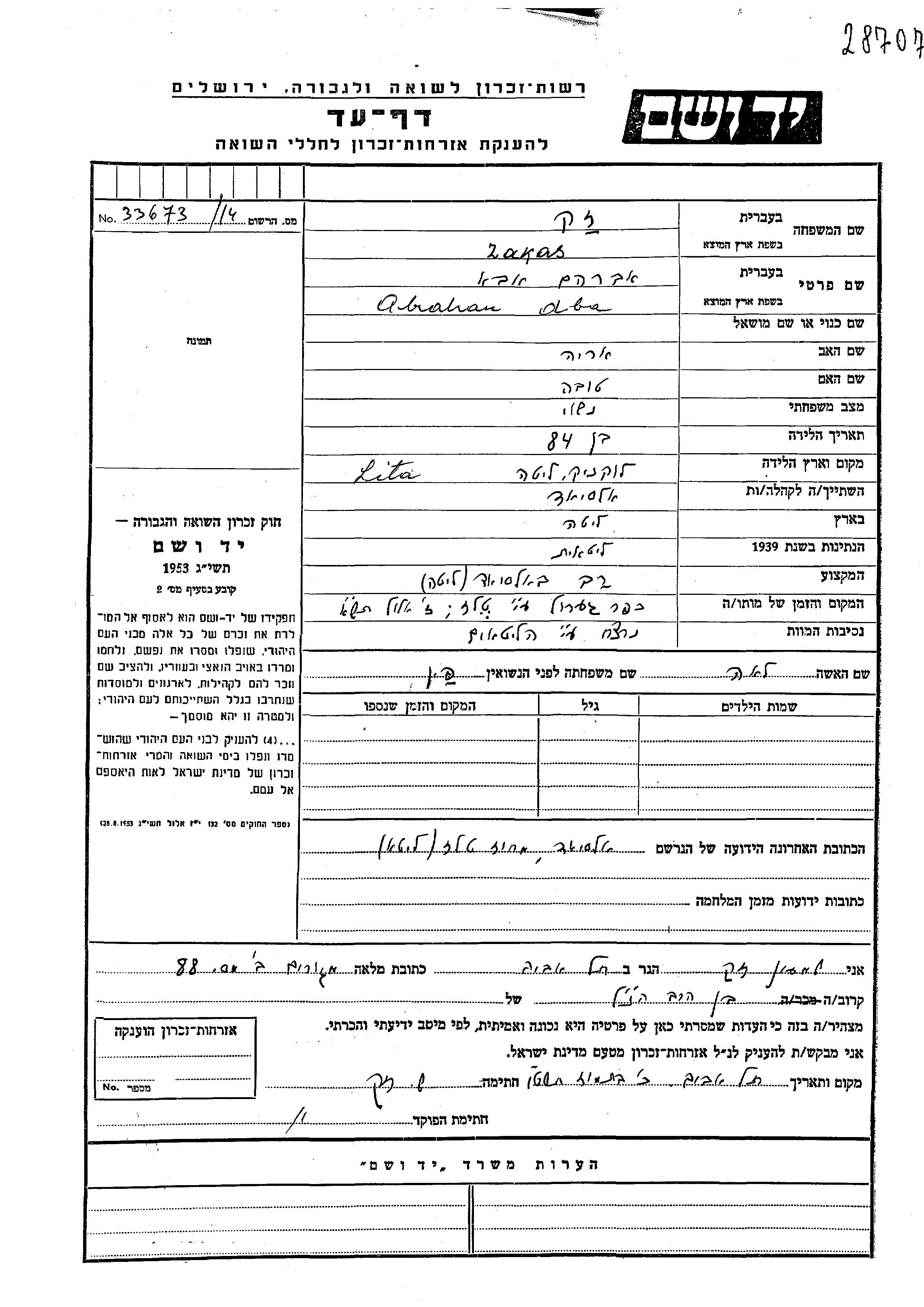
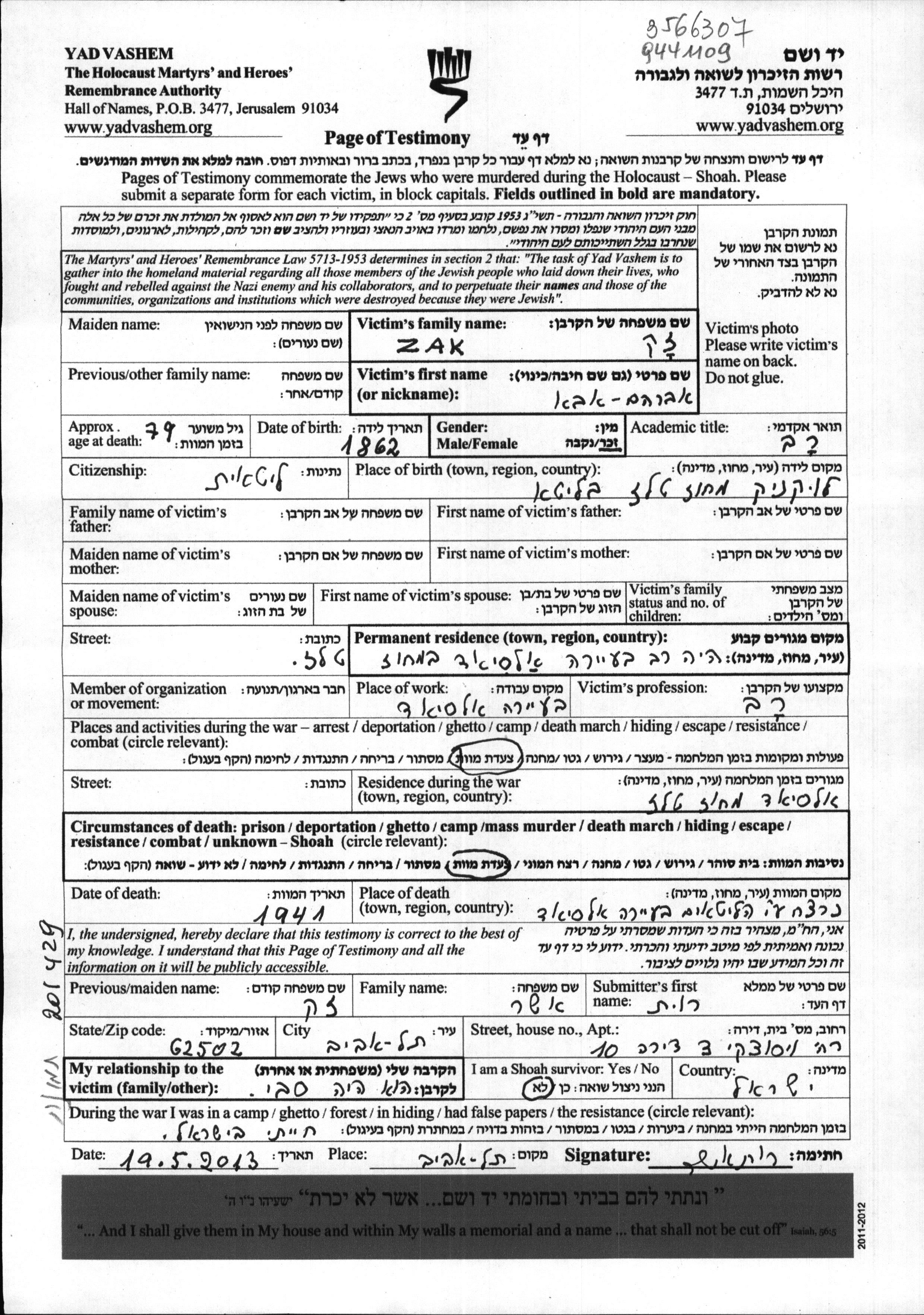
Name variants for further research: the database and the form's Latin lettering spell the surname "Zakas" (entries 10527040 and 17225007) and "Zak" (13907805); the Hebrew on all the forms is זק. Zakas is another rendering of Zak; search both, together with Zaak and Zack, and Alsiad / Alshad / Alsedziai for the town. Source spellings are kept as printed above.
Open discrepancy, not resolved: the son's page gives age 84, which points to a birth year near 1857 (Toratcha's biography notes the same). The granddaughter's page gives birth year 1862 and age 79. The two pages also differ on the place of death (Gerulai versus Alsiad), and Shimon Zak's article and Toratcha give the killing place as the village near Telz.
Readable reprint
Toratcha reprint, retained as readable context rather than a substitute for the original newspaper.